
28 Sep 2026

Doxwell & Rehabilitation Clinic focuses on maintaining health for people of all ages, helping patients pain and prevent disease.

There is a certain kind of frustration that comes with feeling like your body changed the rules without bothering to tell you. You are tired even when you are sleeping enough. You feel puffy, achy, or generally inflamed no matter how well you seem to eat. Your clothes fit differently, and not in a good way. The scale keeps creeping up even though you have not dramatically changed your lifestyle. Maybe your brain feels foggier, your motivation is lower, your sex drive has changed, or you simply don’t feel like yourself anymore.
When several of these symptoms appear at the same time, it is tempting to assume you need to eat less, exercise more, sleep longer, or somehow develop better willpower. Sometimes lifestyle changes absolutely matter, but when fatigue, inflammation, weight gain, brain fog, sleep problems, and hormonal changes start showing up together, it may be time to look at the bigger picture.
Hormones are a good place to start. For women, perimenopause and menopause can bring significant fluctuations in estrogen and progesterone that affect much more than menstrual cycles. Sleep, body composition, mood, energy, libido, muscle maintenance, appetite, and where the body stores fat can all change. Men can experience hormonal changes too, especially shifts in testosterone that may influence energy, strength, muscle mass, sexual function, and body composition.
That does not mean every symptom is caused by hormones. It means hormones deserve to be part of the conversation instead of automatically being ignored.
The thyroid is another major piece. Thyroid hormones help regulate metabolism, body temperature, digestion, energy, and many other processes throughout the body. When thyroid function changes, symptoms can be broad and frustratingly vague. Fatigue, weight gain, constipation, dry skin, hair changes, brain fog, feeling cold, and low mood can all overlap with other hormonal or metabolic issues.
A basic TSH test is useful, but it does not always tell the entire story. Depending on your symptoms and medical history, additional thyroid testing may be appropriate. This is one reason someone can hear, “Your labs look normal,” while knowing very clearly that they do not feel normal.
Metabolic health can also quietly change over time. Blood sugar regulation, insulin sensitivity, sleep, stress, muscle mass, and activity levels all influence how the body handles energy and stores fat. Some people begin noticing afternoon energy crashes, increased hunger, cravings, stubborn abdominal weight, or difficulty losing weight before they ever realize there may be a metabolic component involved.
Poor sleep can make all of this worse. Sleep affects hunger hormones, stress response, recovery, glucose regulation, and energy. If sleep quality declines, it can become part of a cycle where fatigue makes movement harder, stress increases, appetite changes, and weight management becomes increasingly frustrating.
Then there is inflammation, a word that gets thrown around so much in wellness marketing that it can start to mean almost anything. Feeling puffy, achy, sore, fatigued, or generally unwell can have many possible causes. Stress, poor sleep, metabolic dysfunction, autoimmune conditions, medications, infections, diet, smoking, and other health issues can all influence inflammatory processes in the body.
The goal should not be to randomly “fight inflammation.” The goal should be to understand what may be driving the symptoms in the first place.
This is where more comprehensive blood work can become helpful. When several symptoms are happening together, looking at one isolated number rarely gives enough information. At Vitality Health SFL, evaluation may include more in-depth hormone testing, thyroid markers, metabolic testing, nutritional markers, testosterone testing, and other blood work based on the individual’s symptoms, health history, medications, and goals.
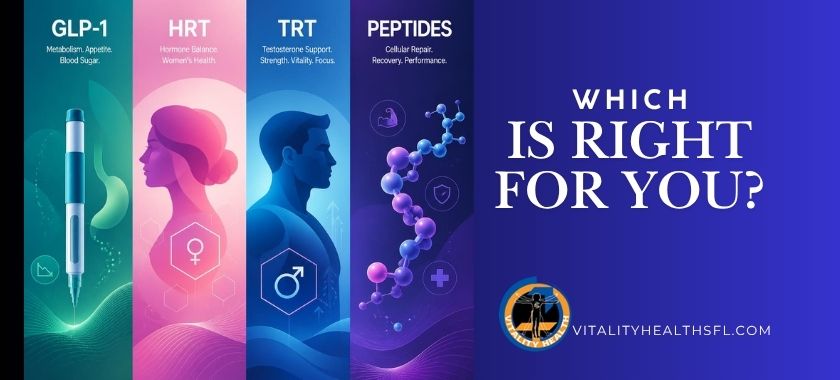
The purpose is not to order every test possible or chase perfect numbers. It is to collect enough information to start connecting the dots. Once you understand what may actually be contributing to the problem, treatment becomes much more specific. For one person, the answer may involve improving sleep, nutrition, resistance training, hydration, or stress management. For someone else, hormone replacement therapy, testosterone replacement therapy, medical weight management, GLP-1 therapy, peptide-based wellness options, or another medically appropriate approach may be worth discussing.
Not everyone needs medication. Not every symptom is hormonal. And not every case of weight gain is a simple matter of calories. If you are tired, gaining weight, feeling inflamed, and wondering why your body suddenly feels unfamiliar, it may be time to stop treating each symptom as a separate problem.
Sometimes the body is not sending six different messages.Sometimes it is sending one message in six different ways.