
16 Oct 2026

Doxwell & Rehabilitation Clinic focuses on maintaining health for people of all ages, helping patients pain and prevent disease.
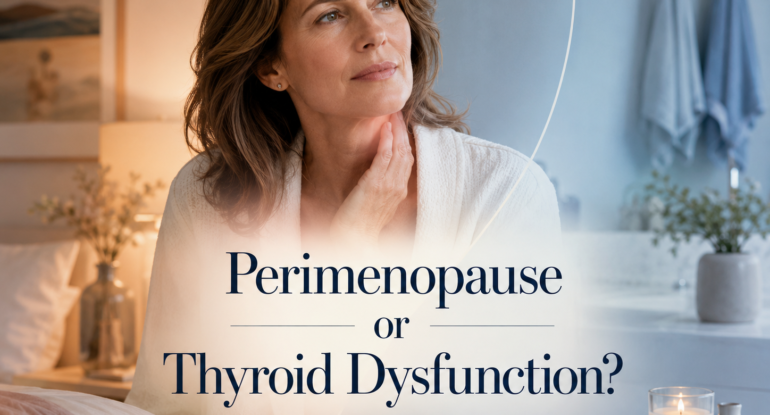
If you’re in your 40s or early 50s and suddenly don’t feel like yourself, you may wonder if you’re entering perimenopause. Irregular periods, fatigue, mood changes, weight fluctuations, brain fog, and sleep problems are all common during this stage of life, but there’s another possibility: thyroid dysfunction.
Because thyroid conditions and perimenopause can mirror many of the same symptoms, figuring out what’s really going on isn’t always straightforward.
Perimenopause is the transition leading up to menopause. During this time, estrogen and progesterone levels fluctuate, causing a variety of physical and emotional changes.
Common symptoms include:
It is important to note that symptoms can come and go and may vary over time.
Your thyroid helps regulate metabolism, energy, body temperature, and many other functions.
Hypothyroidism, or an underactive thyroid, can cause fatigue, weight gain, feeling unusually cold, dry skin, hair thinning, constipation, low mood, brain fog, and menstrual changes.
Hyperthyroidism, or an overactive thyroid, can cause anxiety, difficulty sleeping, increased sweating, heat intolerance, heart palpitations, weight loss, tremors, and menstrual changes.
These both overlap with the symptoms presented during perimenopause.
Certain patterns may provide clues. Hot flashes and night sweats, along with changing menstrual cycles, are particularly common during perimenopause. Symptoms such as persistent sensitivity to cold, constipation, significant dry skin, or unexplained weight gain may suggest hypothyroidism. On the other hand, unexplained weight loss, a consistently rapid heartbeat, tremors, or pronounced heat intolerance may point toward hyperthyroidism.
However, symptoms alone cannot reliably determine the cause.
Absolutely. Perimenopause and thyroid disease can occur at the same time. That’s why it’s important not to automatically attribute every new symptom to “just menopause.” A healthcare professional can look at your symptoms, medical history, menstrual patterns, and, when appropriate, thyroid blood tests such as TSH and free T4.
While the symptoms are similar, treatment is very different. If you have a thyroid issue, you likely can benefit from dietary changes and medication for regulation. If your hormones are starting to change, HRT (Hormone Replacement Therapy) may be highly beneficial. This is why we talk to you in depth, and test for both.
Fatigue, brain fog, sleep problems, weight changes, and mood shifts may be common, but you don’t have to simply live with them.
At Vitality Health SFL, we believe women deserve a personalized approach to their health. Understanding what’s contributing to your symptoms is an important first step toward finding the right path forward. If you’re experiencing new or persistent symptoms and aren’t sure whether they’re related to perimenopause, your thyroid, or something else, talk with a qualified healthcare professional about getting evaluated.
You know your body. If something feels different, it’s worth paying attention to.
Call us at 1-833-4LOWTEE Or contact us through the website and get started. Don’t be dissuaded by the name – we offer telehealth appointments in any of MD licensed states as well as in our office here in Florida.