
02 Nov 2026

Doxwell & Rehabilitation Clinic focuses on maintaining health for people of all ages, helping patients pain and prevent disease.

Your lab work comes back and your testosterone level is marked “normal.” Great, right? Eh, Maybe. Maybe not…
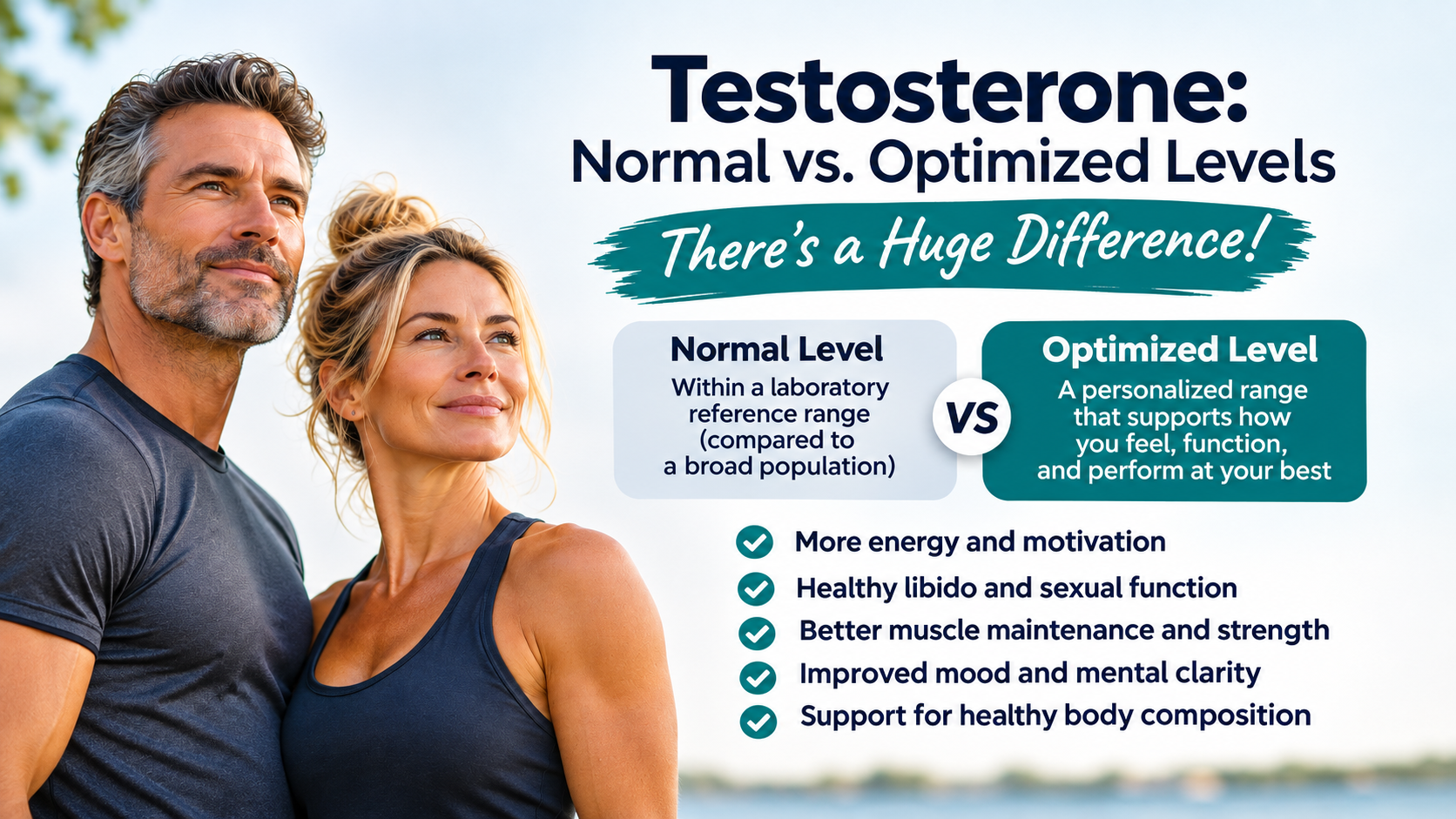
The problem is that a laboratory reference range is designed to show where your result falls compared with a broad population. It has very little to do with if that approved range level is optimized for your age, symptoms, health history, body composition, lifestyle, or overall quality of life.
This is where the conversation about normal versus optimized testosterone levels begins.
A person can technically fall within a laboratory reference range and still experience symptoms such as low energy, reduced libido, difficulty maintaining muscle, slower workout recovery, changes in mood, decreased motivation, or stubborn shifts in body composition. Those symptoms do not automatically mean testosterone is the cause, but they may be a reason to look more closely.
Testosterone should never be evaluated using one number alone.
At Vitality Health, a more complete evaluation may include total testosterone, free testosterone, sex hormone-binding globulin (SHBG), other hormone levels, thyroid markers, metabolic indicators, nutritional factors, medications, symptoms, and medical history. Two people can have similar total testosterone results and feel completely different depending on how much testosterone is actually available for the body to use and what else is happening physiologically.
This is where the word “optimized” requires some clarification.
Optimized does not mean pushing testosterone as high as possible. Higher is not automatically better, and treatment should never be about chasing an impressive laboratory number. The goal is to determine whether testosterone levels are appropriate for the individual while considering symptoms, health risks, treatment goals, and ongoing monitoring.
For men, clinically low testosterone may contribute to changes in libido, energy, muscle mass, strength, mood, and recovery. For women, testosterone also plays a role in sexual health, muscle maintenance, bone metabolism, and overall hormonal balance, particularly as hormone levels shift during perimenopause and menopause.
It is also important to rule out other causes. Poor sleep, thyroid dysfunction, stress, nutritional deficiencies, medications, insulin resistance, and other health conditions can create symptoms that look very similar to low testosterone.
At Vitality Health, comprehensive testing helps build the bigger picture. When clinically appropriate, testosterone replacement therapy (TRT) or hormone replacement therapy (HRT) may be discussed as part of an individualized treatment plan, with appropriate follow-up and monitoring.
The difference between “normal” and “optimized” is not about turning your hormones up to maximum. It’s about understanding what your numbers mean in the context of how you actually feel and function. A lab report can tell you whether you fall inside a reference range. Personalized care looks at the person behind the number.