28 Sep 2026

Doxwell & Rehabilitation Clinic focuses on maintaining health for people of all ages, helping patients pain and prevent disease.

At first, I thought it was just the weight. The number on the scale kept creeping up, my clothes were getting tighter, and the things that used to work when I wanted to drop a few pounds suddenly were not working anymore. So naturally, I did what a lot of people do. I blamed myself. I figured I needed to eat less, move more, be more disciplined, and stop making excuses.
Except that was not really the whole problem.
I was tired. I was not sleeping as well. My motivation was different. My body did not feel as strong or responsive as it used to. My mood was off, my energy was inconsistent, and I just did not feel like myself. The scale was simply the easiest thing to point at because it gave me a number. The rest of it was harder to explain.
That is where a more comprehensive approach to medical weight loss can make a real difference.
At Vitality Health, the goal is not to look at someone, see that they have gained weight, and immediately hand them another diet plan. The process can include in-depth blood work analysis, hormone testing, and a broader look at what may actually be going on inside the body. Weight changes do not happen in a vacuum, and they are not always as simple as calories in and calories out.
Hormones, sleep, stress, insulin resistance, metabolism, age, medications, activity levels, and other health factors can all affect how you feel and how easily your body gains or loses weight. That does not mean every extra pound is caused by a hormone imbalance, but it does mean there is value in looking at the entire picture instead of assuming the answer is always more restriction and more exercise.
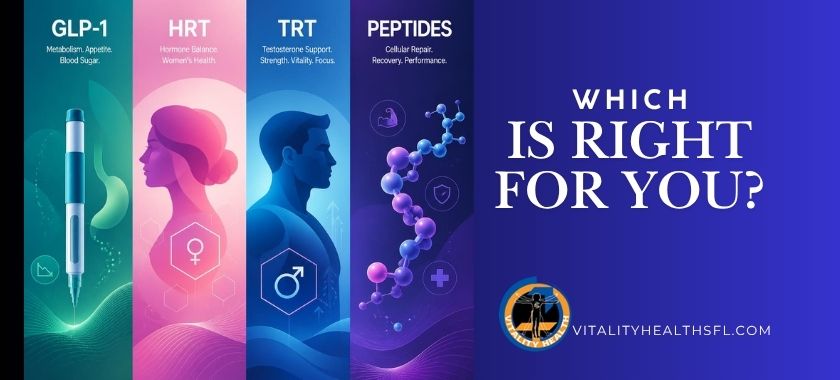
Blood work can help identify patterns that may be contributing to the problem, while hormone testing can provide even more context. For both men and women, changes in testosterone, estrogen, progesterone, thyroid function, and other hormones can affect energy, sleep, muscle mass, body composition, mood, libido, and overall wellbeing. When appropriate, hormone replacement therapy may become part of a personalized treatment plan.
For some patients, medical weight loss may also include GLP-1 medications. These medications can be effective tools for certain individuals, but they are not meant to be treated like a quick fix. They should be used with proper medical guidance and as part of a larger plan that takes the patient’s health history, goals, and overall wellbeing into account.
Peptide therapy may also be an option depending on the individual. Different peptides are used for different purposes, and they may be considered as part of a broader wellness strategy when medically appropriate. The point is not to throw every available treatment at someone who wants to lose weight. The point is to understand what their body may actually need and then build a plan around that.
For a lot of people, the real goal is not just to see a smaller number on the scale.
It is to wake up with energy again. It is to feel stronger. It is to sleep better, think more clearly, feel comfortable in your clothes, and stop wondering why your body suddenly feels unfamiliar. It is to understand what changed instead of feeling like you are constantly fighting yourself.
At Vitality Health, medical weight loss can include a deeper look at blood work, hormones, metabolism, and treatment options like HRT, TRT, GLP-1 medications, Naltrexone HCL, 7-Keto-DHEA, and peptides when appropriate. The goal is not simply weight loss for the sake of weight loss. It is helping patients feel better, function better, and understand what their body is asking for.
Sometimes losing weight is part of feeling like yourself again. Sometimes, the most important step is figuring out why you stopped feeling like yourself in the first place.
Call us at 1-833-4LOWTEE Or contact us through the website and get started. Don’t be dissuaded by the name – we offer telehealth appointments in any of MD licensed states as well as in our office here in Florida.